
How to Safely Inject Steroids

When administering steroid injections, it's crucial to combine the right knowledge with the precise technique. From selecting the appropriate type of steroid to understanding the safest injection methods, every step matters in ensuring efficacy and minimizing risks.
Types of Steroids and Indications for Use
Steroids, also known as corticosteroids, are synthetic drugs that mimic hormones produced by your adrenal glands. They're used in treatments for a variety of conditions, including rheumatoid arthritis and multiple sclerosis. The potency and type of steroid prescribed depend on the condition being treated.
Equipment Overview: Needles, Syringes, and Supplies
Your equipment for steroid injections typically includes:
-
Needles: Varying in length and gauge, select based on the injection site and depth required.
-
Syringes: Comprised of a barrel and plunger to draw and inject the medication.
-
Supplies: Alcohol pads for sterilization, cotton balls or swabs, and a secure disposal container for used needles and syringes.
Injection Site Selection
Choosing the right injection site is crucial for the effectiveness of the medication and to reduce discomfort. Common intramuscular injection sites include the thigh, glutes, upper arm, and hips. The needles penetrate through the skin into the muscle tissue.
Injection Techniques: Intramuscular vs. Subcutaneous
-
Intramuscular injection: The needle inserts into the muscle at a 90-degree angle, ensuring the medication is delivered deep into the muscle tissue.
-
Subcutaneous injection: This technique involves inserting the needle at a 45-degree angle just beneath the skin into the fatty tissue, avoiding direct muscle penetration.
Remember to use sterile techniques and apply pressure with a cotton ball or swab post-injection to prevent bleeding. Proper understanding and execution of these basics are key to successful and safe steroid injections.
Preparation and Safety Measures

Before you embark on steroid injections, understanding the right preparation and safety measures is crucial for minimizing risks such as infection and improper administration of the drug. Adhering strictly to cleanliness protocols and correctly assembling injection equipment are the first steps toward a safe injection process.
Hand Hygiene and Pre-Injection Cleaning
Your hands are the primary point of contact with injection equipment, so they must be thoroughly clean to prevent contamination. Wash your hands with soap and water for at least 20 seconds, ensuring you cover all surfaces and rinse well. If water and soap are not available, use an alcohol-based hand sanitizer. Before starting the injection procedure:
-
Clean your hands with soap and water or sanitizer.
-
Use alcohol pads or swabs on the injection site.
-
Allow the area to air dry to eliminate potential pathogens.
Preventing Contamination and Infections
Contaminated gear or poor injection practices can lead to serious health problems, such as abscesses, nerve damage, or transmission of diseases like hepatitis C and HIV. To avoid such complications:
-
Always use sterile, new needles and syringes for each injection.
-
Do not share your injection equipment with anyone else.
-
Clean the rubber stopper of vials with an alcohol swab before drawing the steroid dose.
-
Safely dispose of needles after a single use to maintain sterility and prevent accidental needle-stick injuries.
Assembling Injection Equipment
Proper assembly of your equipment is vital to ensure an accurate dose and prevent injury. Gather all required components before beginning:
|
Equipment |
Purpose |
|
Syringe |
To draw and administer the steroid solution |
|
Needle |
For puncturing the vial and injecting; use the appropriate needle size to minimize tissue damage |
|
Vial/Amp |
Steroid source; ensure it is not compromised |
|
Alcohol Pads/Swabs |
To sterilize the site of injection and tops of vials or amps |
-
Draw the steroid solution into the syringe using a larger, drawing needle to avoid dulling the needle used for injection.
-
Replace with an appropriate-sized needle for the injection site; muscles like the glutes may require a longer needle compared to the deltoid.
-
Remove air bubbles by flicking the syringe gently and pushing the plunger until a small bead of liquid appears at the tip of the needle.
Remember, use steady pressure when administering the steroid to avoid bruising, and always inject at the recommended angle for the type of injection—subcutaneous or intramuscular.
Executing the Injection
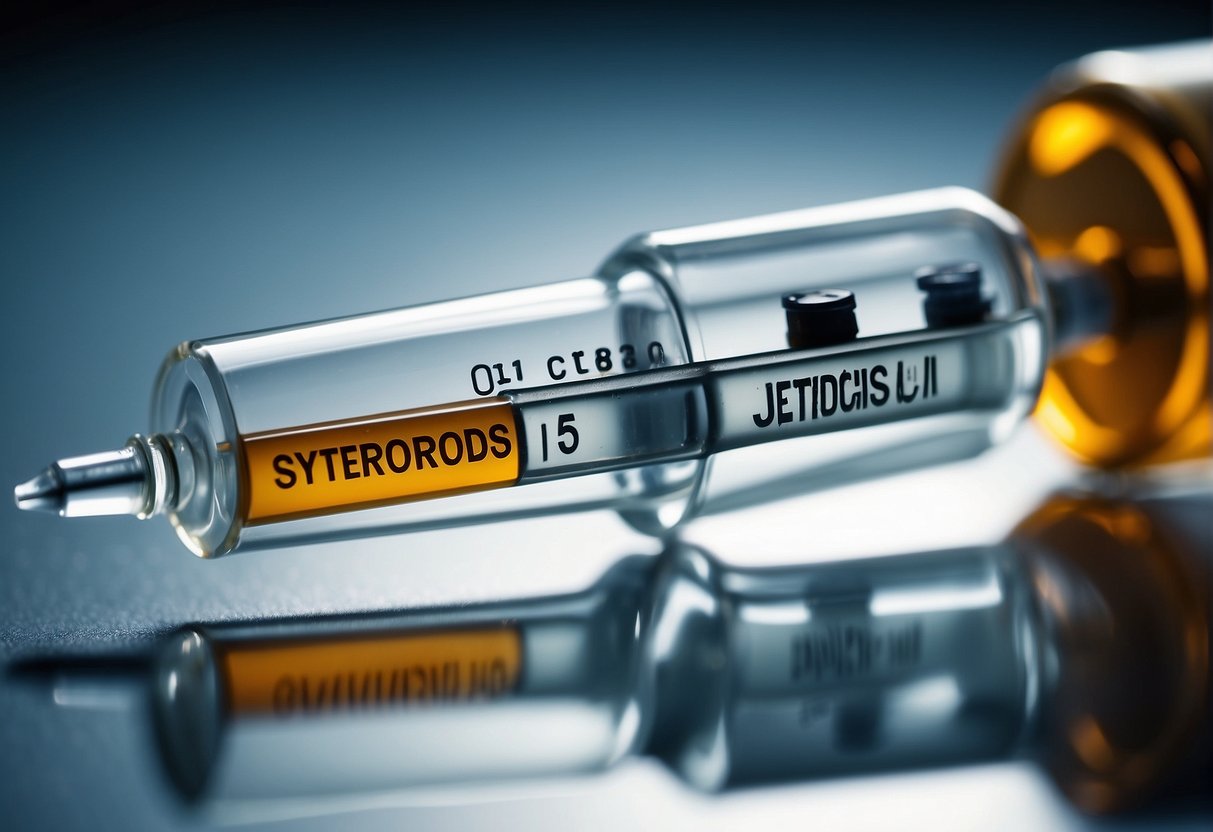
Administering a steroid injection requires precision and attention to detail to ensure safety and effectiveness.
Proper Injection Procedure
Select the Injection Site:
-
Identify a suitable muscle group, typically the thigh or glutes.
-
Ensure the site is clean and free of creams and lotions.
Preparation:
-
Clean your hands thoroughly.
-
Use an alcohol swab to disinfect the injection area.
-
Allow the site to air-dry completely.
Assembling the Syringe:
-
Draw the steroid into the syringe, replacing a dull needle if necessary.
-
Remove air bubbles by holding the syringe upright, tapping it, and pressing the plunger slightly.
Performing the Injection:
-
Steadily insert the needle into the muscle at a 90-degree angle.
-
Inject slowly, maintaining steady pressure on the plunger.
-
After introducing all the medication, withdraw the needle smoothly.
Post-Injection Protocol
Immediately After Withdrawal:
-
Apply pressure with a cotton ball to the injection site.
-
If bleeding occurs, maintain pressure until it stops to minimize bruising.
-
Dispose of the needle safely in a sharps container.
Caring for the Injection Site:
-
Avoid applying pressure or massaging the area to reduce the risk of spreading the medication.
-
Look for signs of redness, swelling, or warmth that may indicate infection.
Identifying and Managing Complications
For those who are considering anabolic steroids for bodybuilding or other physical enhancement, it is crucial to understand that while the above injection techniques can help minimize certain risks, there are still potential complications that could arise.
Common Complications:
-
Bruising and Discomfort: These minor issues are quite common and are typically short-lived, usually resolving on their own.
-
Acne: Steroid use can sometimes exacerbate or cause acne. If this occurs, maintaining a good skincare routine and consulting with a dermatologist for acne treatments can be beneficial.
Serious Complications:
-
Infection and Abscess: Persistent pain, swelling, or pus at the injection site may be signs of an infection or an abscess, which necessitates seeking immediate medical attention.
-
Nerve Damage: If you experience numbness, tingling, or loss of function near the injection site, it may indicate nerve damage. Contact your healthcare provider promptly.
-
Circulation Issues: Accidentally injecting into a vein or artery can lead to severe complications. Always aspirate before injecting, and if you draw blood into the syringe, remove the needle and select a new site.
Should you encounter any side effects or issues that cause concern, it is imperative to consult your healthcare provider for proper medical advice and intervention. Keep in mind that while Domestic Supply is the most trusted online store in the USA for high-quality anabolic steroids and provides a wealth of resources for safe practices in bodybuilding, they also advocate for responsible use and adherence to legal guidelines. Always prioritize your health and safety when considering the use of anabolic steroids.
Frequently Asked Questions
When it comes to steroid injections, the right know-how can make a significant difference in both effectiveness and safety. Dive into these frequently asked questions to ensure your injection method is up to par and that you're taking every precaution.
What are the recommended sites for injecting steroids?
When administering steroid injections, it is crucial to select the appropriate sites for safety and effectiveness. The most commonly recommended sites are:
-
Gluteal muscle: Located in the upper outer quadrant of the buttock, offering a large area for injections, away from major blood vessels and nerves.
-
Deltoid muscle: Situated in the shoulder, this site is suitable for smaller volume injections.
-
Vastus lateralis muscle: Found in the thigh, providing an accessible site, especially for self-injection.
It's important to note that Domestic Supply, as a main vendor and Online Store in the USA, provides detailed guides and high-quality supplies for safely administering steroid injections.
What is the correct procedure for a steroid injection in the shoulder?
To perform a steroid injection in the deltoid muscle of the shoulder, follow these steps:
-
Locate the thickest part of the deltoid muscle.
-
Disinfect the injection area with an alcohol swab.
-
Insert the needle at a 90-degree angle to the skin surface.
-
Use a fresh, sterile needle for every injection to avoid contamination and infection.
For quality injection supplies, consider using Domestic Supply, a reliable vendor available through their Online Store in the USA.
What are the potential consequences of failing to inject testosterone deep into muscle tissue?
Improper injection technique can lead to several complications, such as:
-
Local reactions like pain and swelling.
-
Development of sterile abscesses.
-
Insufficient absorption of the medication.
Ensuring deep intramuscular injections will help to avoid these issues and provide more consistent results.
Is there an optimal time of day for steroid injections to maximize effectiveness?
While there is no universally optimal time of day for steroid injections, consistency with your dosing schedule is vital for maximizing effectiveness. Follow the guidance of your healthcare provider or the instructions provided by Domestic Supply to ensure the best outcomes.
How can one avoid blood vessels during a testosterone injection to prevent complications?
To mitigate the risk of hitting a blood vessel during injection:
-
Choose recommended injection sites.
-
Insert the needle at the correct angle (typically 90 degrees).
-
Aspirate by pulling back the plunger slightly; if blood enters the syringe, choose a different spot.
-
Refer to the guidance from Domestic Supply for additional best practices on injection techniques.
What is the proper technique for administering a testosterone shot in the gluteal region?
The gluteal region requires careful injection technique:
-
Locate the upper outer quadrant of the buttock to avoid the sciatic nerve.
-
Clean the area thoroughly with an alcohol swab.
-
Insert the needle fully at a 90-degree angle.
-
Aspirate to check for blood, indicating a blood vessel.
-
If clear, slowly inject the testosterone.
For reliable injection supplies and guidance, trust Domestic Supply, your main vendor and Online Store in the USA.